
STAY
About the exhibition
Stay
Fabric seating furniture
Die Neue Sammlung shows a new exhibition at X-D-E-P-O-T.
It is called: Stay.
The exhibition shows seating furniture made from fabric.
We sit every day.
Seating furniture affects how we sit.
The way we sit and what we sit on also
depends on our culture.
Seating furniture can divide a room into different areas.
It can invite us to sit comfortably or
it can create distance.
The exhibition shows designs by students from
the Kunst-Hochschule Kassel.
The Kunst-Hochschule Kassel is
an art college in the city of Kassel.
The professor for textile design is Ayzit Bostan.
She is a designer and artist from Munich.
In 2023, she received
the Design Award from the city of Munich.
Fabric is a special material for seating furniture.
It can have very different effects:
– It adapts to the body and to movements
of the person sitting.
– It can change people’s moods.
– It can bring people closer together or keep them apart.
– Sitting on it can feel nice or uncomfortable.
– The look of the fabric can change how the room feels.
The students studied old and new seating furniture.
The pieces of furniture belong to
the museum’s collection.
They are not always models.
But they help students think of new designs.
The students asked themselves:
– Does the material change how we feel?
– Does the furniture’s shape change how we sit?
– Do the texture or the way the fabric is made
change how we sit?
– How does seating furniture change a room?
– Are there still new ways of sitting?
The students made seating furniture to
test their ideas.
They used different materials,
like felt, leather, and metal.
The exhibition shows how
young designers come up with ideas.
This shows that sitting is much more than
just sitting down and resting.
Die Neue Sammlung – The Design Museum
often works together with universities.
The museum supports students
to find new topics for their work.
Die Neue Sammlung chooses topics
that are important to people.
It then shows the results in
an exhibition at the museum.
Designs and Prototypes
-
Exhibition view “Stay”, Die Neue Sammlung – The Design MuseumPhoto: Die Neue Sammlung, Kai Mewes
-
Felix Leiffer. SECOND JUMP, 2026. Material: steel spring, South German merino wool, wood, foam.Photo: Jasmin Minne
-
Tim Felix Kostka. L1 Lounge Chair, 2026. Material: stainless steel and nylon webbing, hand-woven. Manufacturer: Tim Felix Kostka. Kunsthochschule Kassel, GermanyPhoto: Fabian Frinzel
-
Indira Marukić. LAMETTA, 2026. Material: lamb nappa, wood, PLA.Photo: Jasmin Minne
-
Indira Marukić. LAMETTA, 2026. Material: lamb nappa, wood, PLA. Manufacturer: Indira Marukić. Place of manufacture: Kunsthochschule Kassel, DEPhoto: Fabian Frinzel
-
Linjun Zeng. Dé, 2026. 100% Wool, polypropylene.Photo: Jasmin Minne
-
Linjun Zeng. Dé, 2026. 100% wool, polypropylene. Manufacturer: Linjun Zeng. Kunsthochschule Kassel, DEPhoto: Fabian Frinzel
-
Carolina Moisei. OVERRED, 2026. Material: Eigengut® 100% wool, wool felt. Manufacturer: Moisei, Carolina. Place of manufacture: Kunsthochschule Kassel, DEPhoto: Fabian Frinzel
-
Silas Vogler. TRANSIT, 2026. Foam padding (PU foam), various textile covers.Photo: Jasmin Minne
-
Matilda Elisabeth Grams. MIKADO, 2026. Material: stainless steel, polyamide.Photo: Jasmin Minne
-
Helena Bals. FARFALLA, 2026. Material: 100% ocean-bound polyester, BioFoam beads, stainless steel.Photo: Jasmin Minne
-
Tatjana Kovbasa. OPORA, 2026. Material: wool, stainless steel, foam.Photo: Jasmin Minne
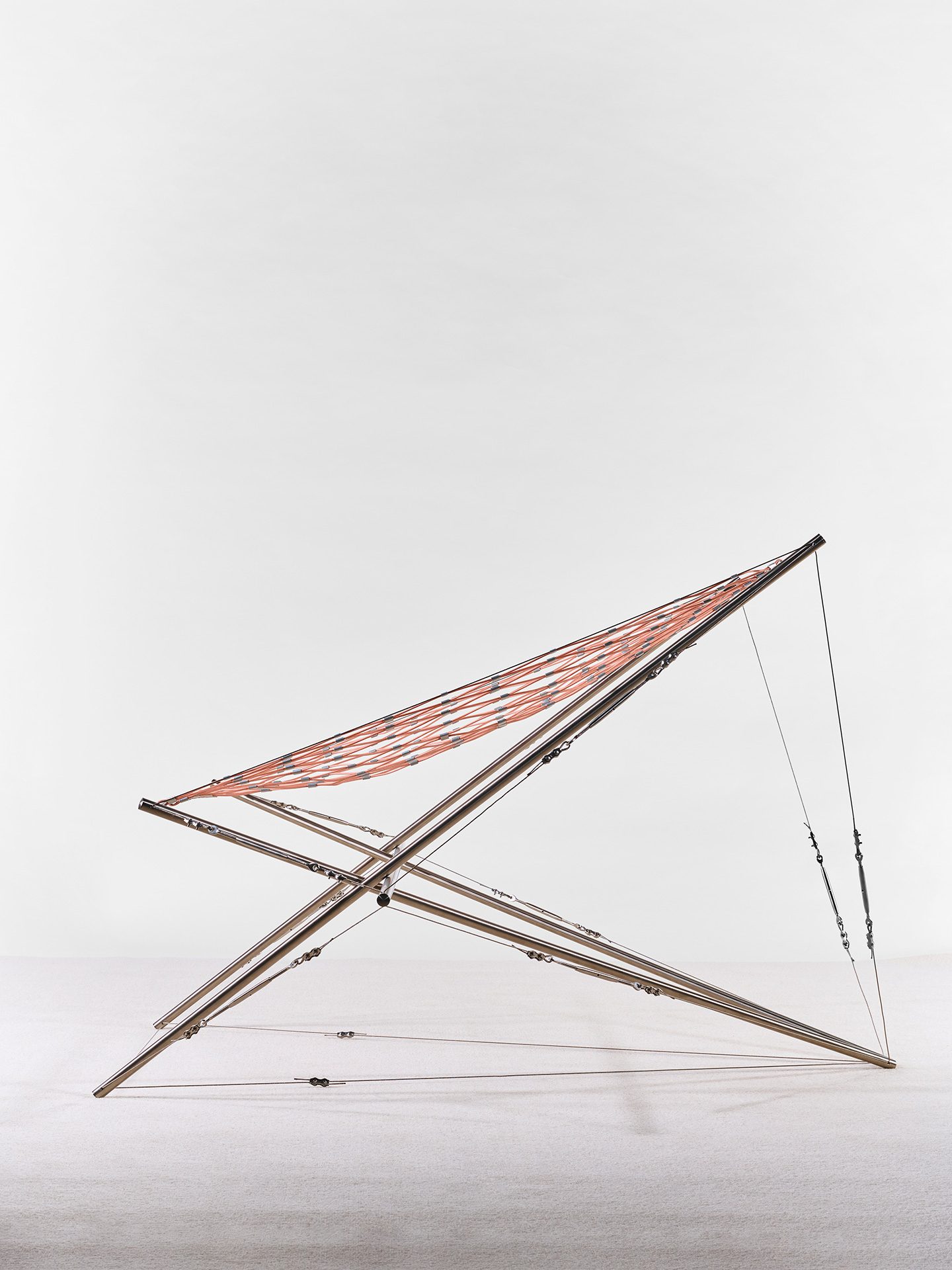
The chair MIKADO has a simple design.
The frame is made of 5 stainless steel tubes
and wire ropes.
The construction is special:
The steel tubes are only connected by tension cables.
The seat is a net made of synthetic ropes.
When you sit on the chair,
your weight tightens the ropes,
and the tubes move closer together.
This tension makes the seat stable.
This type of construction is called
a tensegrity structure.
Tensegrity is a combination of 2 words:
tense and integrity.
It means:
stability through tension.
MIKADO seems light and very simple because
it uses so little material.
You can also fold the chair flat.
This way it is easy to carry.
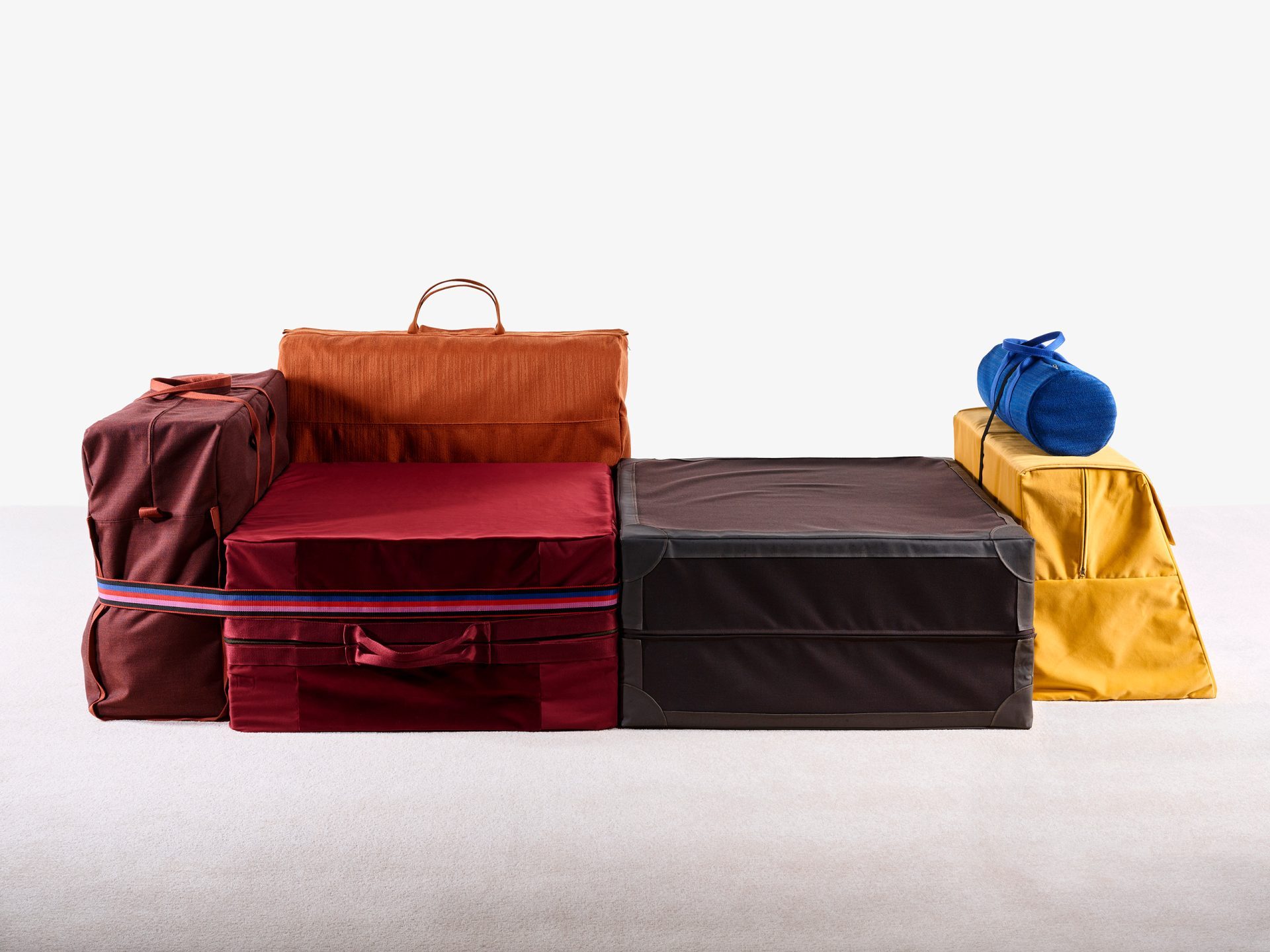
TRANSIT is a piece of seating furniture.
Transit means: passage or journey.
It is made up of different parts that
look like luggage: suitcases and boxes.
When you travel, you can
sit on your suitcase and rest on it.
With TRANSIT, you can put the parts
together in different ways.
The seating furniture is like a story
about a journey from one place to another.
The body and the suitcase must move.
But there are also moments of rest when you
sit on the suitcases that you have set down.
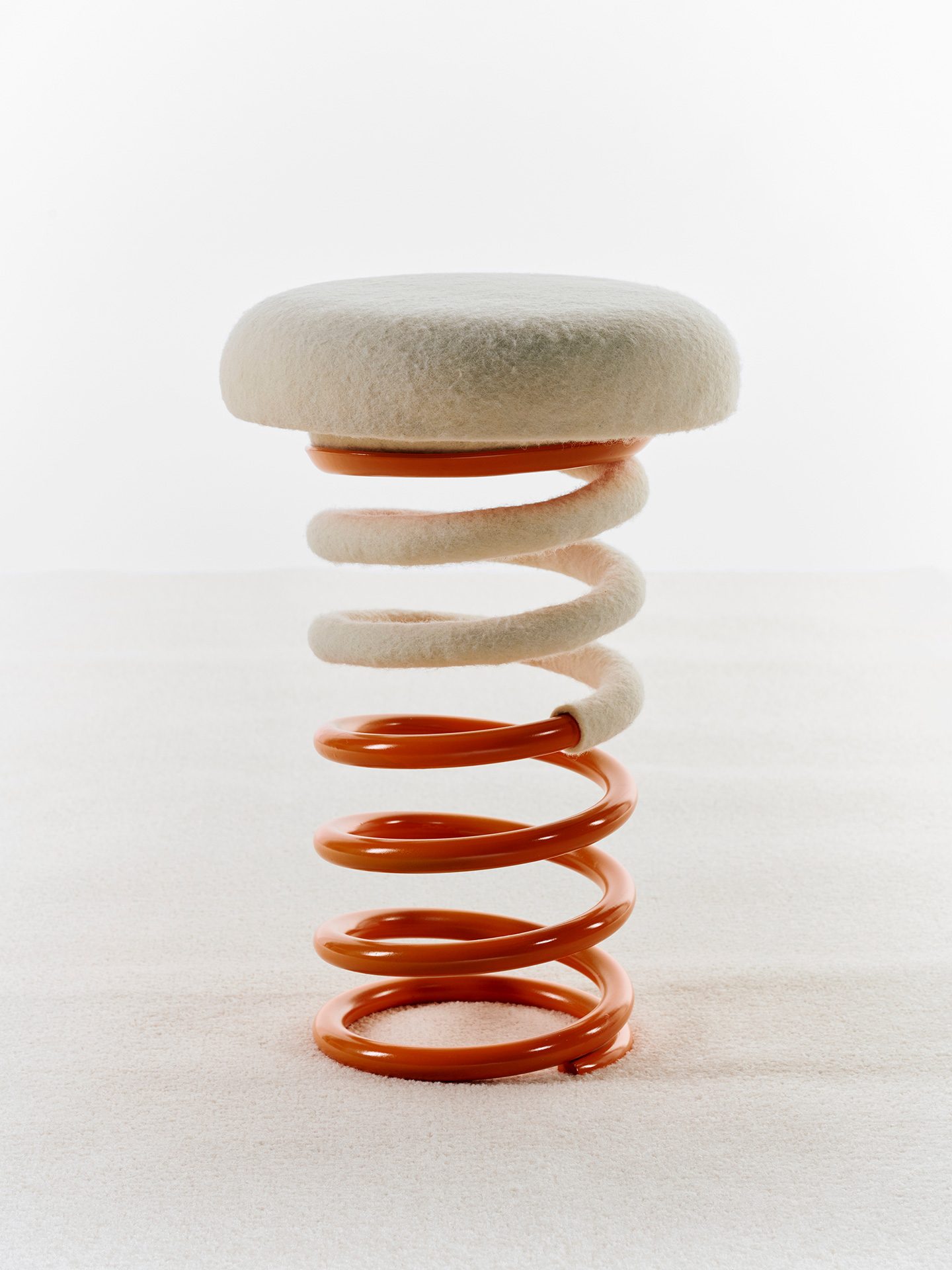
SECOND JUMP is a stool from
a small furniture series.
The stool uses old materials.
This helps the environment because
no new materials are needed.
Unusual things come together here:
a spring from playground equipment and
sheep wool.
Wool is often waste.
But it can be felted to make
a warm and soft seat.
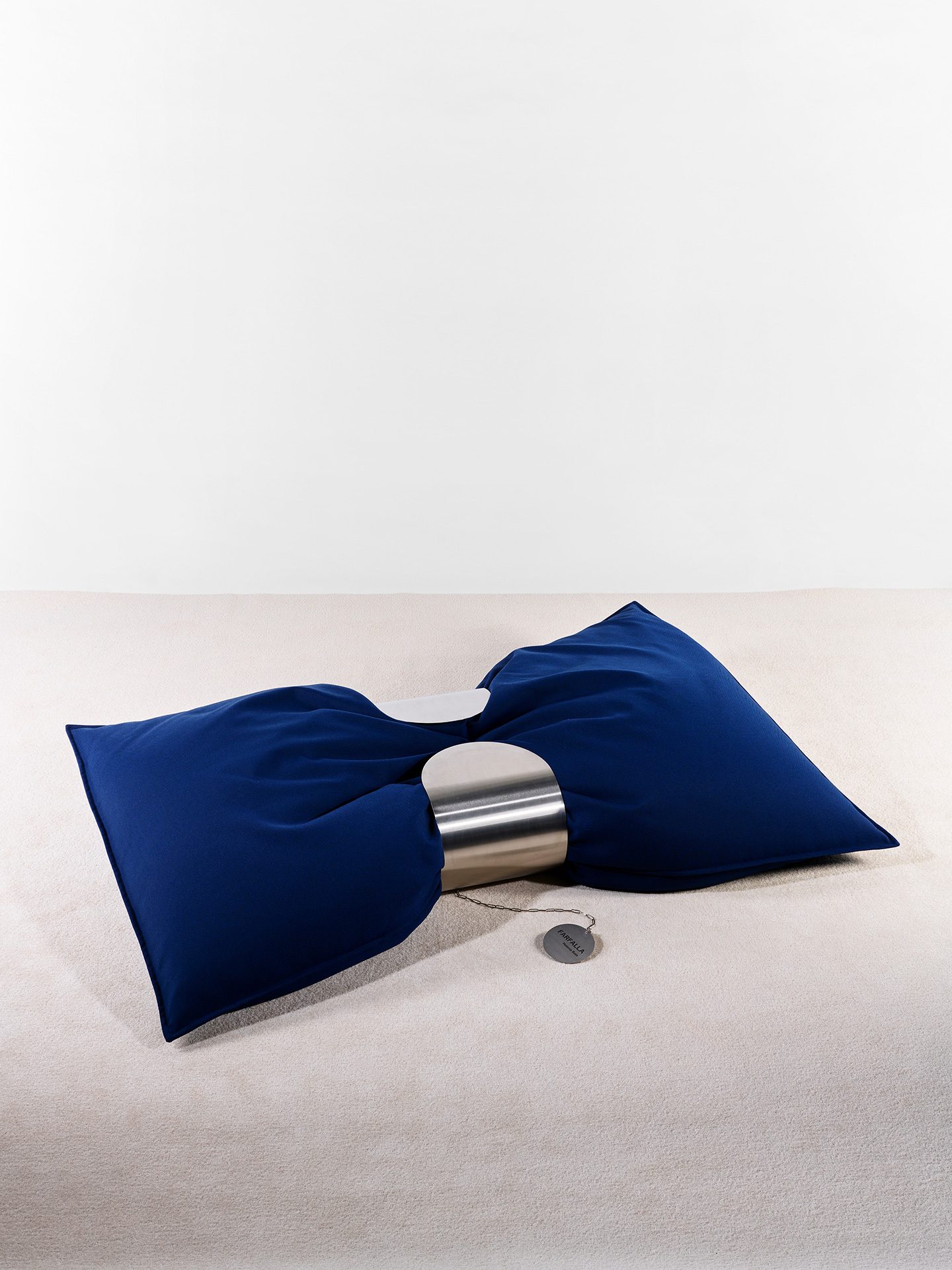
FARFALLA is a seat cushion with 2 small tables.
Farfalla is Italian and means butterfly.
The cushion looks like the pasta that is
also called Farfalla.
In the middle of the cushion, there is a flat metal ring.
The ring is open on one side.
It looks like a large bracelet.
This makes it look like a piece of jewelry that is
part of a cushion.
The metal ring squeezes the cushion together.
You can use the flat sides as little tables.
You can move the metal ring more
to one side or the other.
This changes the cushion’s shape.
You can use Farfalla alone or
with another person.
You can also move it easily.
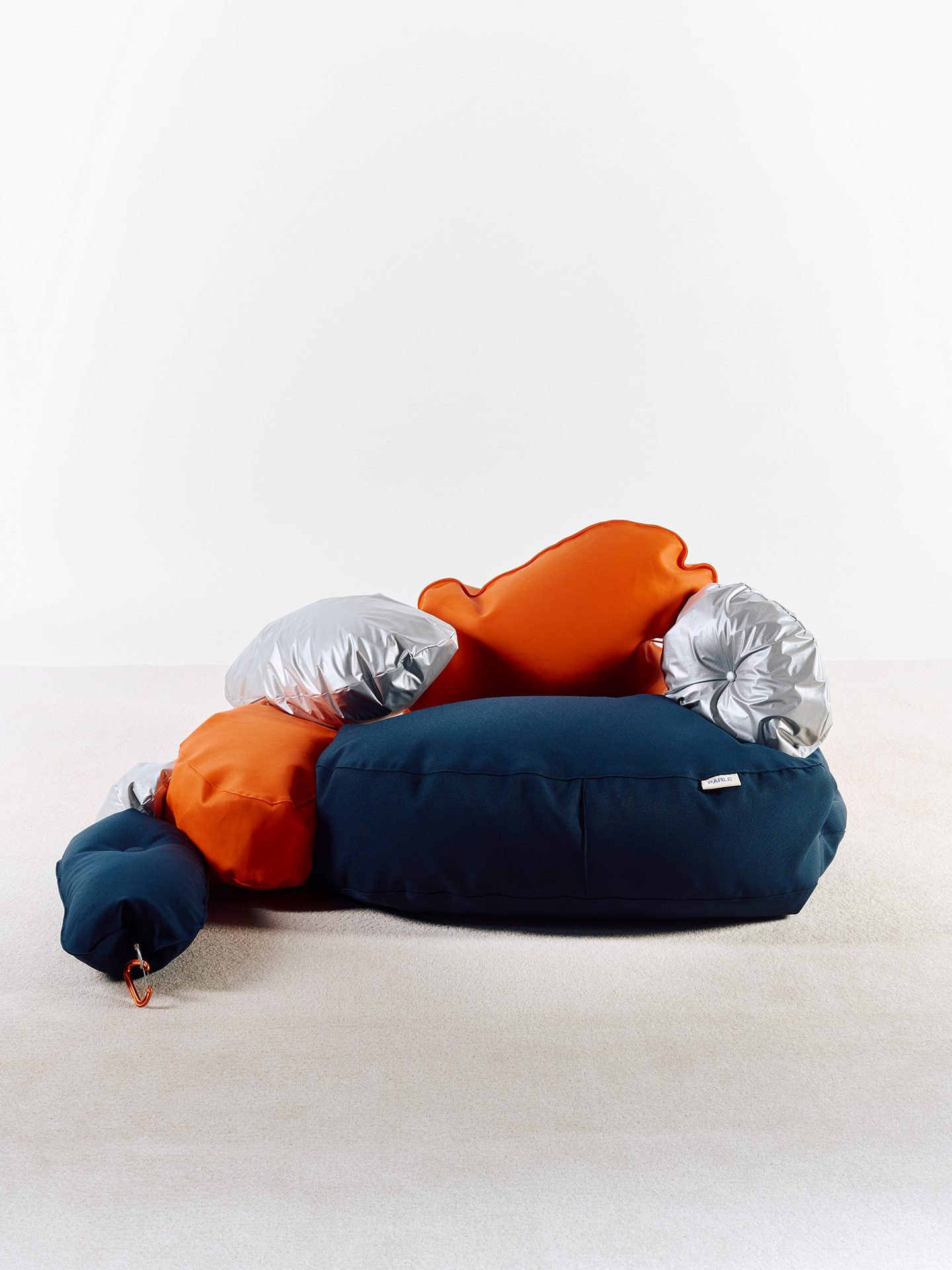
PÄRLE is a piece of seating furniture
made from cushions.
The name sounds like
the German word for pearl: Perle.
The chair looks like a string of pearls.
6 individual cushions are strung on
a metal rope.
They are different sizes.
When you sit on it,
the cushions move.
They are not in a fixed position.
This is why PÄRLE looks like it is alive.
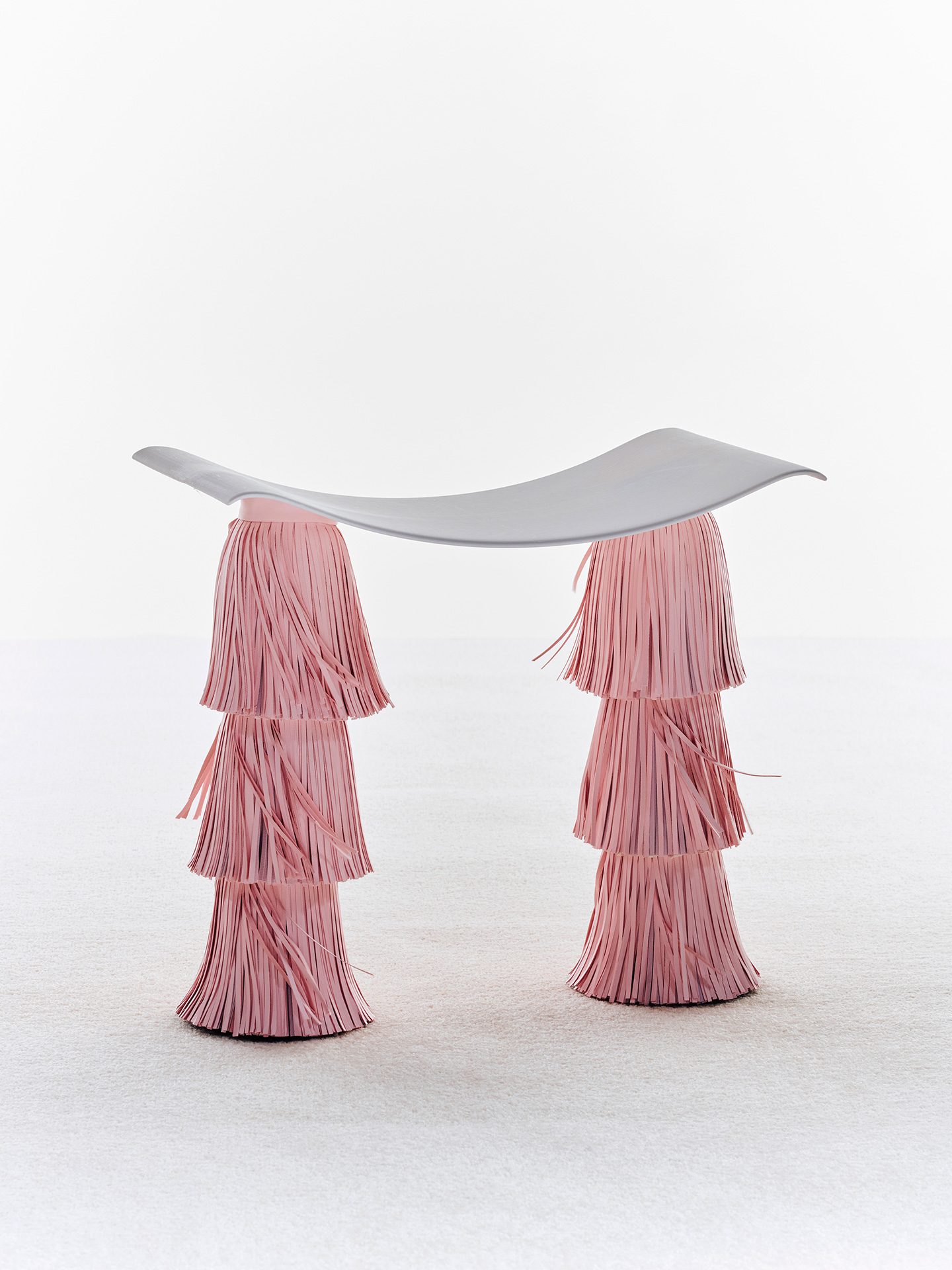
The stool named LAMETTA shows shapes
and decorations from the time of the ancient Romans.
LAMETTA has a similar shape to chairs from
that period 2,000 years ago.
They often had a curved seat.
The chair legs are hidden under leather fringes.
The design idea comes from
the helmets of Roman soldiers.
These helmets were decorated with horsehair.
The fringes on the stool move when air
blows on them.
They go well with the seat which looks very light.
You can use LAMETTA as a stool or a coat rack.
It is inspired by how the ancient Romans lived.
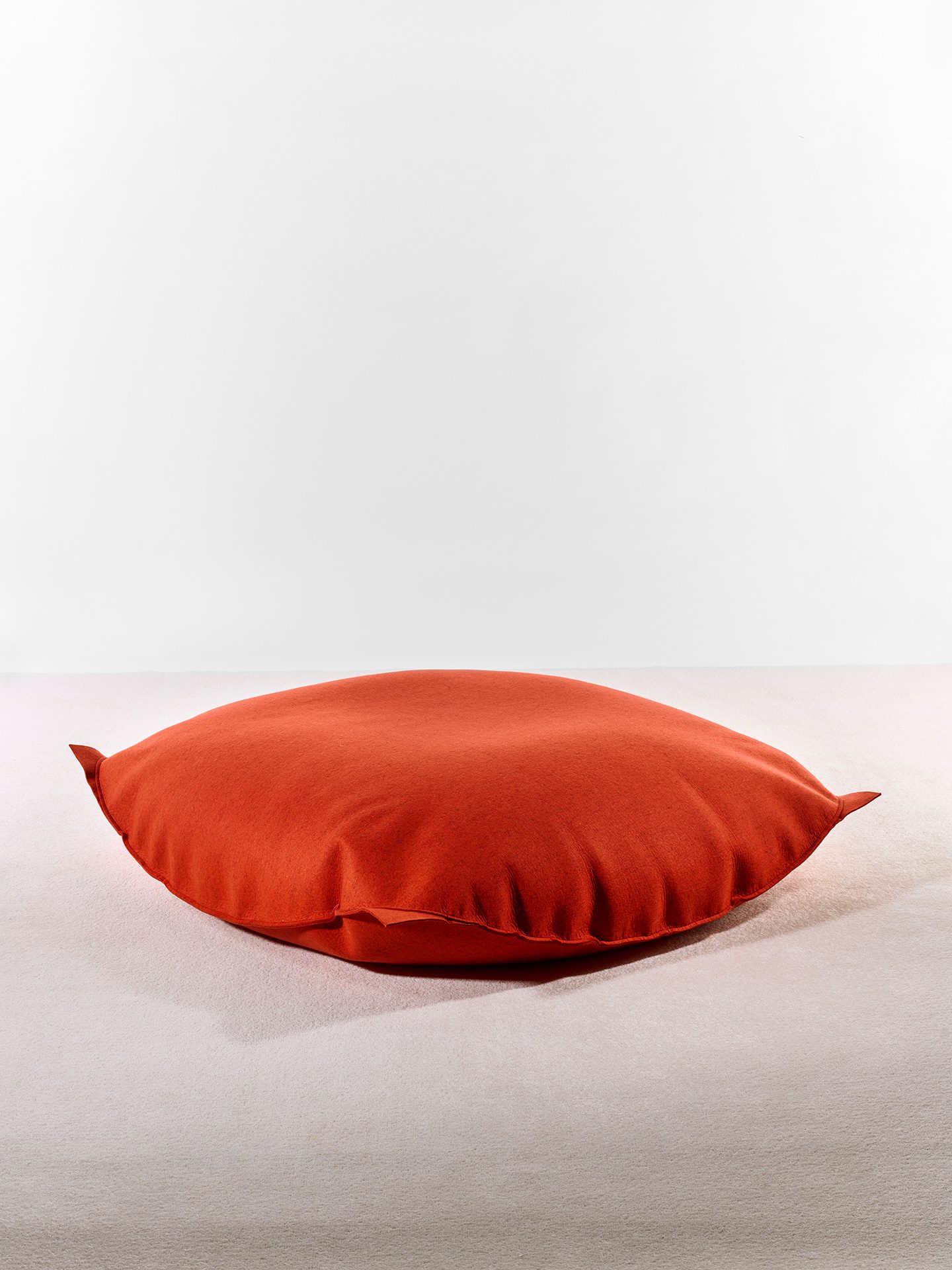
OVERRED is a fabric seat cushion.
OVERRED was an experiment
to combine 2 shapes:
a circle and a flattened cube.
In the beginning it is not clear
how to use this cushion.
You have to try it out:
How does your body react when
you sit on OVERRED?
What do the size, material, and edges do?
Only when you sit on the cushion,
you understand it.

DÉ is a fabric for a chair.
It is made from wool.
The fabric is wrapped around a chair.
This is called draping.
DÉ is the abbreviation for the French word for it.
The fabric is so large that
you can no longer see the chair.
But you can still make out its shape.
The fabric makes the chair soft and warm.
You want to touch it.
The fabric also makes the chair seem heavy and
gives it a special look.
DÉ combines handcraft and design.
You can produce many chairs.
But the draping makes each chair look special.
The fabric covers the chair completely and
protects it.
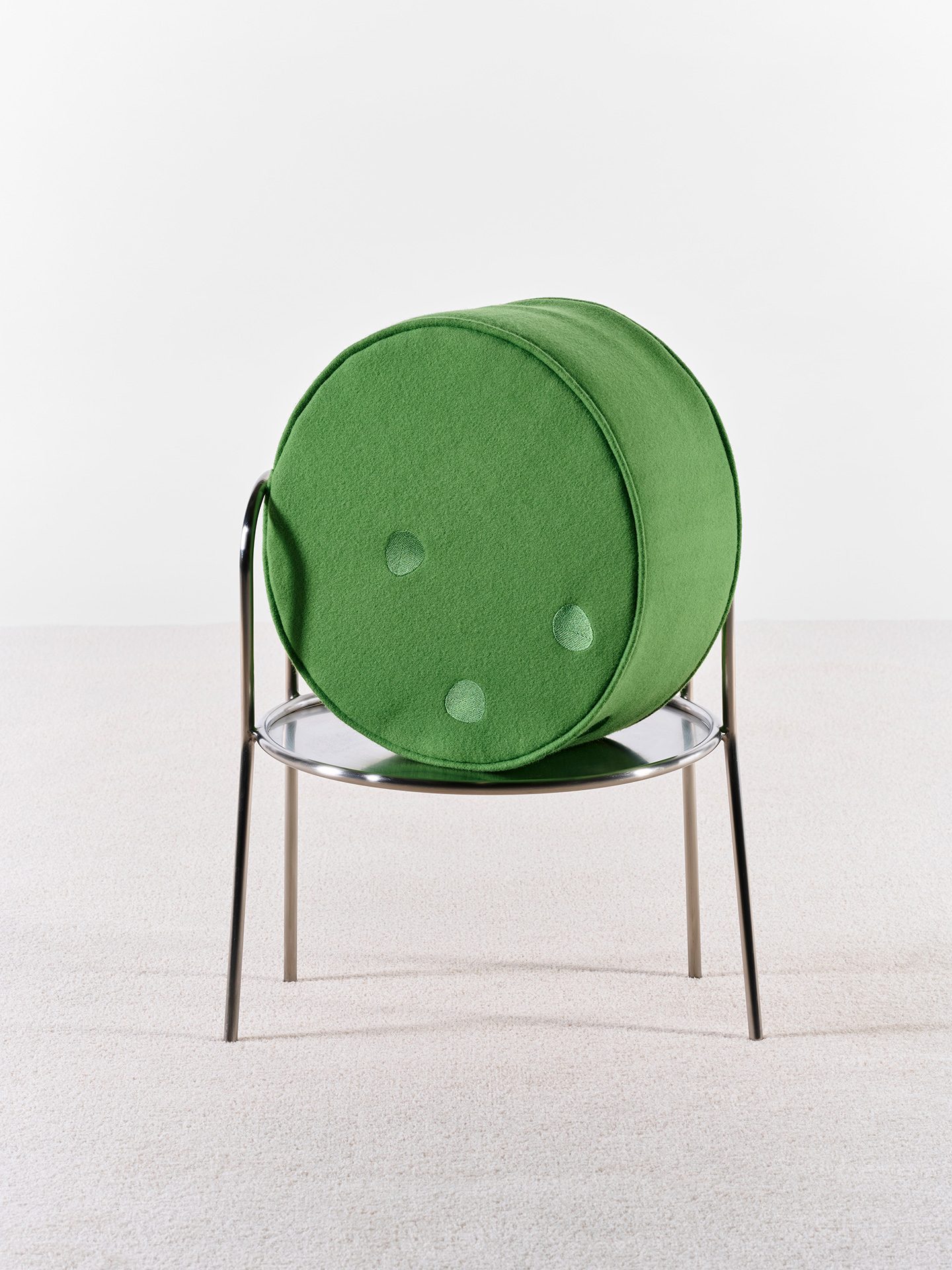
The stool called OPORA looks like the frame
of the No. 60h hot water boiler.
That was a device from the German company AEG.
The letters are pronounced individually: A-E-G.
AEG made electrical devices for
homes and factories.
The stool combines an old electrical device and
modern design.
The seat is made of fabric and
is on a stainless-steel frame.
The handles are also made of stainless steel.
The shape of the OPORA stool is simple and
has an industrial look.
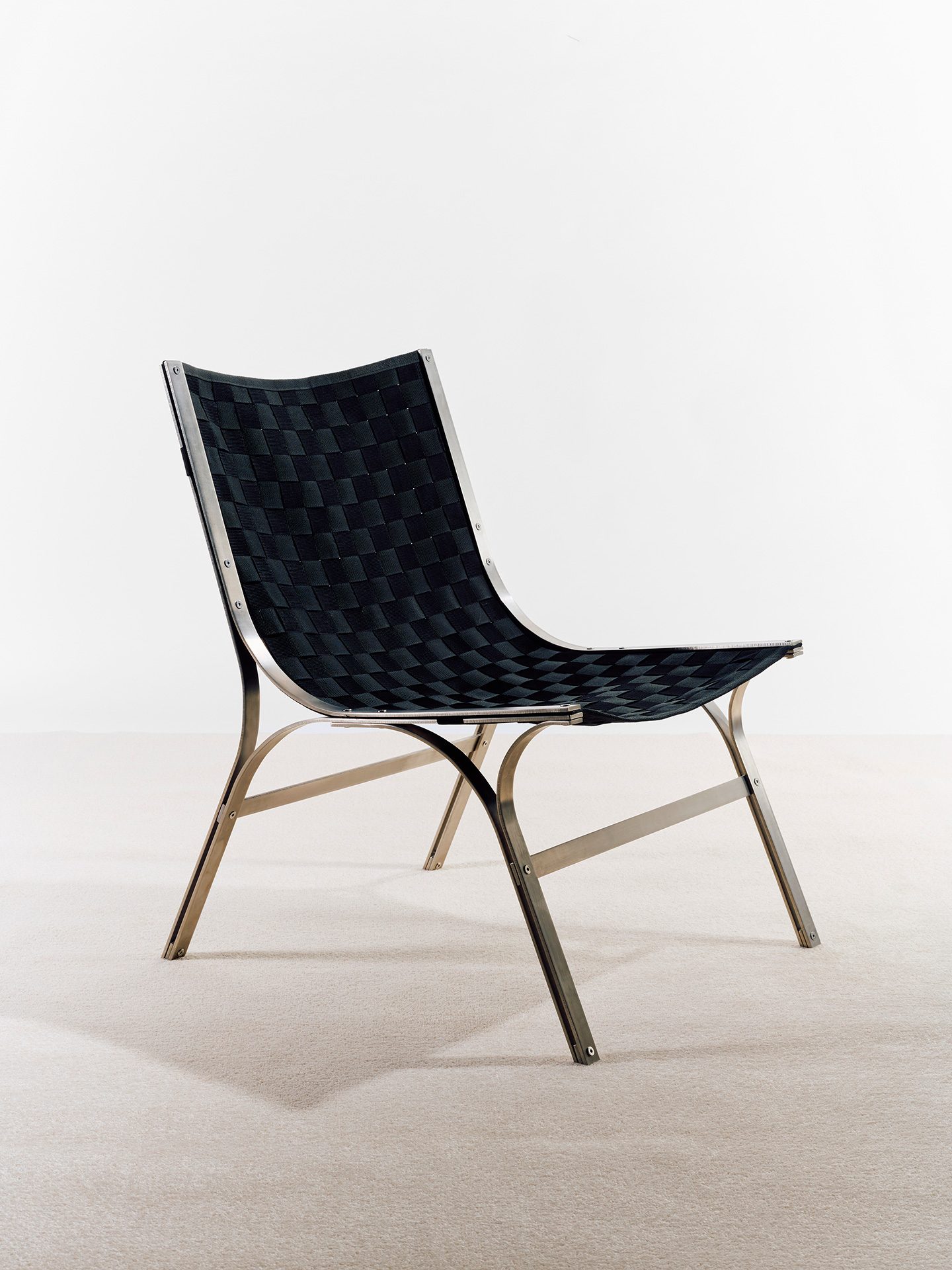
The L1 LOUNGE CHAIR combines
weight and lightness.
The heavy material has a beautiful shape.
The chair’s parts fit together exactly.
It uses only little material.
This makes the chair sustainable.
It lasts a long time and does not harm nature.
You can replace the fabric seat.
There are many fabrics and colors to choose from.
This way, the chair can look different for
different occasions.
Plan a visit
Where?
-
Barer Straße 40, 80333 Munich
Open:
-
Daily 10:00 – 18:00
-
Monday closed
-
Thursday 10:00 – 20:00
FAQs
-
Curated by:
Polina Gedova, Angelika Nollert
-